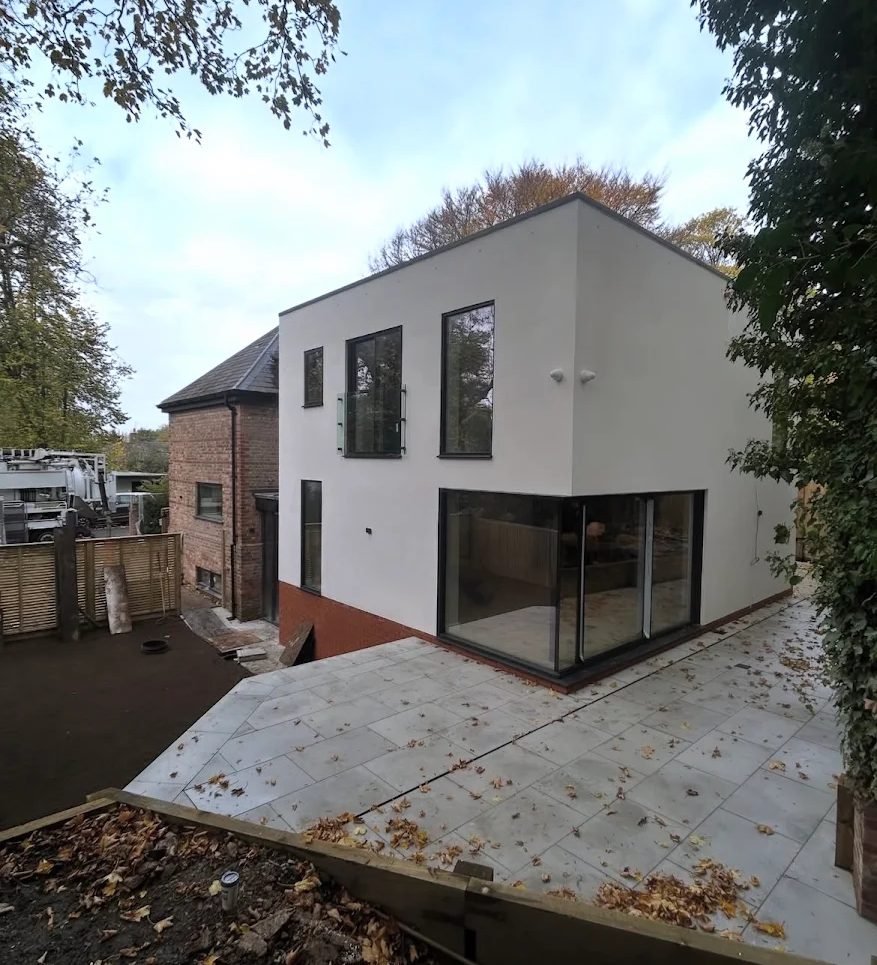
Rendering in Wakefield
External render on houses, extensions and new builds — sand and cement, silicone thin-coat or monocouche, plus repairs to cracked and blown render.
- External rendering
- Silicone render
- Monocouche
- Render over pebbledash
- Render repairs
- New build rendering
Outside walls, sorted
Render does two jobs — it keeps weather out of the wall and it changes how the whole house looks. We'll tell you which system suits your walls before you commit to anything.
Render systems
- Sand & cement render
- Silicone thin-coat render
- Monocouche through-colour
- Basecoat & mesh reinforcement
- Textured & smooth finishes
- Bell cast & stop beads
Full elevations
- Whole house rendering
- New builds & extensions
- Rendering over pebbledash
- Gable ends & chimneys
- Garden & boundary walls
- Matching in to existing render
Repairs & upkeep
- Cracked render repair
- Blown or hollow render removal
- Patching after new windows
- Sills, reveals & beading
- Recoating tired render
- Making good before a sale
Painted or through-coloured?
Sand and cement is the traditional route. It's hard-wearing and cost-effective, and it gets painted once cured — which means you can change the colour later, but you'll want to repaint it every few years.
Silicone thin-coat and monocouche are through-coloured: the colour runs all the way through the material, so there's no painting at the end and no repainting down the line. They're more forgiving of movement and shed dirt and water well.
Which one is right depends on what's underneath, the exposure of the wall and what you want it to look like. We'll go through it on the quote rather than pushing one system at everybody.
Ask about your wallsFrom tap-test to final coat
We check the wall
Existing render gets tap-tested for hollow sections, and we look at the substrate, the beading and any damp or cracking before quoting.
Prep and basecoat
Loose material off, beads and stops set, then a basecoat with mesh reinforcement where the system calls for it.
Top coat and clean up
The finish coat goes on to the texture agreed, windows and ground are protected throughout, and scaffold and waste are cleared at the end.
Renderers near you
Wakefield based, working across West Yorkshire.
Rendering questions
How long does rendering a house take?
A typical semi is usually a few days to a week depending on the size, the number of elevations, access and the system being used. Weather plays a part too.
You'll get a realistic window with the quote.
Can you render over pebbledash?
Often yes, provided the pebbledash is sound and well keyed. Where it's hollow or coming away it needs taking off first.
We tap-test the walls before quoting so you know which job you're paying for.
What colours can I have?
Through-coloured systems come in a wide range of standard colours, with whites, greys and creams being the most popular locally. Sand and cement render is painted afterwards in whatever you like.
We'll show you the colour options for the system we recommend.
Does render need painting?
Through-coloured silicone and monocouche renders don't — the colour is in the material. Traditional sand and cement render does need painting, and re-coating every so often.
What time of year can rendering be done?
Most of the year. It needs to be above freezing and not driving with rain while it goes on and cures, so hard frost and heavy weather can push a job back a few days.
Do you render new builds and extensions?
Yes, including making good where a new extension meets existing render so the finish carries across without an obvious join.
Rendering enquiry
Tell us the property type and which elevations you want doing. A photo of the outside wall tells us most of what we need.